
Some of the most impactful capital decisions in a health system do not start as sourcing events, but rather with a clinical or operational opportunity.
A surgeon sees a better way to approach a procedure. A service line identifies a way to improve access or differentiate care. A department brings forward a technology that supports a specific patient pathway but does not fit neatly into an existing capital category.
These requests can be difficult to evaluate. If they are handled too informally, the organization risks fragmented adoption, clinical risk, and disconnected spend. If they are pushed through a standard commodity sourcing model, the evaluation may not appreciate the workflow or clinical benefits that make the technology valuable in the first place.
Therein lies the challenge with targeted clinical innovation.
Health systems typically have well-established processes for buying large, familiar categories of capital equipment: imaging platforms, surgical towers, and beds. But some of the most transformative clinical equipment, providing improved patient care or competitive differentiation from other health systems, comes into the organization through a different path: a service-line priority, a physician-led request, a procedural improvement, or a department-level capital proposal.
These technologies still belong in the capital portfolio, but they require financial discipline, sourcing rigor, value analysis, lifecycle planning, and cross-functional governance. To achieve this, they need an evaluation process that reflects how they will actually be used.
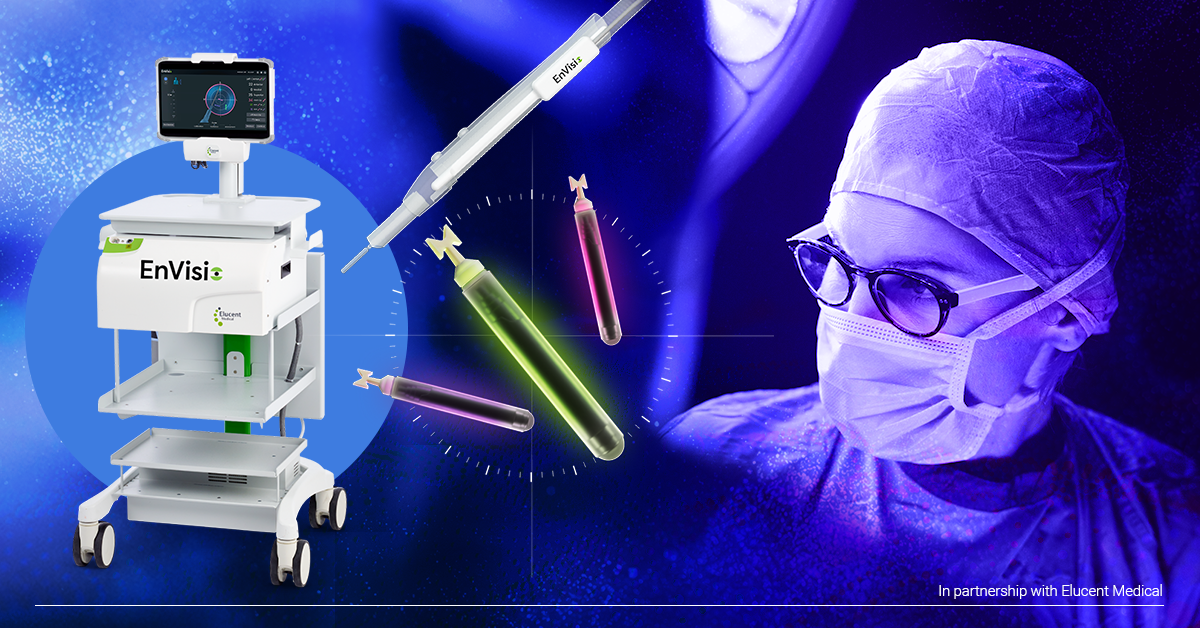
Elucent Medical’s EnVisio® platform is a useful example. EnVisio is described as an “In-Body Spatial Intelligence™” platform for surgical guidance during breast surgery, designed to provide continuous real-time 3D spatial awareness and enable more precise localization and navigation throughout the procedure. The platform includes both capital and non-capital components: SmartClip® and SmartSensor™, as well as the EnVisio System, which includes the SmartSurface™ technology. SmartSensor attaches to existing surgical instruments and displays real-time distance, depth, and directional feedback from the smart tool tip to the SmartClip marker, helping surgeons localize targets with greater precision and workflow efficiency.
For supply chain, procurement, capital planning, and value analysis teams evaluating something like the EnVisio platform, the broader point is clear: innovative capital equipment often requires bringing together clinical workflow, physician adoption, capital investment, procedure-specific components, training, support, and long-term asset management.
This requires a different kind of capital playbook.
For commodity categories, acquisition cost, supplier leverage, standardization, and contract terms often drive the conversation. Those factors still matter, but they are not enough.
The better question is: what capability does this technology create for the health system?
A purchase ends when the equipment arrives. A capability requires adoption, training, utilization, support, measurement, and ongoing ownership.
That is where many innovation requests get stuck. A technology may be clinically compelling, but the business case may not be translated into the language of capital planning. Or the evaluation may focus too narrowly on price, without enough attention to how the technology will be used, supported, scaled, and measured.
A stronger capital playbook should help health systems evaluate four areas: strategic fit, operational fit, economic fit, and portfolio fit.
Targeted innovation should connect to a clear clinical goal.
That might include service-line growth, physician recruitment or retention, patient access, care pathway redesign, procedural efficiency, differentiation in a competitive market, or quality and experience goals.
With EnVisio, the strategic fit conversation starts in breast cancer care. This is a focused clinical area where innovation may be tied to the surgical pathway, localization workflow, physician experience, and service-line strategy. Elucent’s EnVisio System achieves this by providing continuous real-time 3D surgical awareness and supporting precise localization through the use of SmartClip, SmartSensor, and SmartSurface technology.
For a health system, that makes the first evaluation question relatively clear: is breast cancer care a strategic priority, and would this technology support the way the organization wants that service line to grow or improve?
That does not mean EnVisio should be evaluated only by the breast surgery team. It means the request should be anchored to the broader service-line goal before the discussion moves to pricing, contracting, or capital approval.
A strong capital review would ask:
That is the difference between treating EnVisio and other targeted innovation as a one-off device request versus evaluating it as a potential service-line capability.
Innovative capital often changes the way work gets done.
That means the evaluation should include the teams who will touch the workflow: surgeons, radiology, nursing, OR leadership, scheduling, sterile processing, biomedical engineering, supply chain, and service-line administration.
For EnVisio, the workflow implications are central to the product story. SmartSensor attaches to existing instruments and transforms them into smart surgical tools that provide real-time distance, depth, and directional feedback from the tool tip to the SmartClip marker, reducing the need for additional tool exchange during the surgery. EnVisio also includes SmartSupport™ as an on-demand virtual technical and clinical assistance through a secure HIPAA-compliant platform.
Those details matter because they point to how the technology would be adopted in practice.
A supply chain or value analysis team would not only ask whether the equipment works. They would ask how it changes the procedure, who needs to be trained, how clinicians will use it, what support is available, and whether it fits into the existing operating room environment.
For EnVisio, the operational review might include:
This is where sourcing becomes more strategic. The goal is not only to negotiate a device or system, it is to understand the clinical environment around it.
A technology like EnVisio may create value through workflow fit, confidence in adoption, and support during use. Those factors should be evaluated directly, not treated as secondary details.
Targeted clinical technologies often have a more complex financial model than the capital quote suggests.
There may be a capital system, procedure-based components, service agreements, training requirements, support needs, software upgrades, and future expansion considerations. The business case may depend on utilization, physician adoption, site rollout, or service-line growth.
In relation to the EnVisio System, the platform includes a capital component, along with disposable instruments including SmartClip and SmartSensor. SmartSensor is described as a single-use device that attaches to existing surgical instruments transforming them into smart tools, while SmartClip emits a unique signal that generates real-time positional data within the spatial field.
That means the economic evaluation should not stop at the equipment purchase. It should look at the full operating model.
A procurement or finance team would need to understand:
A health system can expect the supplier to provide these inputs and calculations but should also validate the assumptions and calculations themselves before distributing among internal stakeholders.
This is especially important if the targeted clinical innovation begins as a focused service-line request. A single-site deployment may make sense as a starting point, but if the technology could become part of a broader breast cancer care pathway, the health system should think ahead about contracting, support, training, and asset tracking.
Otherwise, a one-time capital decision can quietly become a fragmented operating model.
The better approach is to model the innovation as a capital-enabled clinical capability. That means evaluating the system, the related procedure-based components, the adoption assumptions, and the long-term support model together.
Once innovative equipment is approved, it becomes part of the asset base. It needs to be tracked, maintained, supported, measured, and eventually replaced.
This is where targeted technologies can become invisible. They may be important to a service line, but not large enough as a category to receive routine portfolio-level attention. Over time, that can create gaps in lifecycle planning, utilization visibility, service oversight, and replacement forecasting.
Potential questions for a health system to consider include:
That same discipline applies to EnVisio. If the platform is approved, it should not live only in a service-line spreadsheet, a department budget, or a one-time purchasing file. It should be visible as part of the capital portfolio, tied to the request that justified it, the contract that supports it, the service model around it, and the utilization or value measures that show whether it is performing as expected.
The goal is not to slow down adoption. The goal is to make adoption manageable.
Health systems do not need a custom process for every innovation. They need a repeatable way to evaluate targeted clinical technologies within the broader capital portfolio.
EnVisio provides a useful example of what that can look like.
First, define the strategic fit. For EnVisio, that means understanding how the platform supports breast cancer care, surgical workflow, and service-line priorities.
Second, evaluate the operational fit. For EnVisio, that means looking at how SmartClip, SmartSensor, the EnVisio System, and SmartSupport would affect real clinical workflows.
Third, model the economic fit. For EnVisio, that means evaluating all potential costs, including capital equipment, procedure-based components, training, software, support, utilization, and potential expansion together. Additionally, assess revenue impact from increased patient volumes and market share changes, as well as potential reimbursement code impact.
Fourth, establish the portfolio fit. For EnVisio, that means deciding how the system will be owned, tracked, supported, measured, and managed over time.
This kind of playbook gives supply chain, procurement, value analysis, finance, clinical engineering, and service-line leaders a shared language for evaluating technologies that do not fit neatly into traditional sourcing categories.
It also helps innovative suppliers engage with health systems in a more useful way. Instead of presenting only a product case, they can help the organization understand implementation, adoption, support, and long-term value.
The right capital playbook gives health systems a way to evaluate targeted innovation with the rigor it deserves, without forcing it into a model built for commodity categories.
Some innovation does not fit the standard capital sourcing model. That does not make it less important. It means health systems need a better way to evaluate, adopt, and manage it.
When they do, they can make stronger capital decisions, support the clinical innovations that matter, and manage those investments as part of a connected, long-term capital strategy.
To learn more about the EnVisio platform, its clinical workflow, and how it fits into a modern capital evaluation process, visit elucent.com.